
How to Negotiate Your Linen Agreement and Get the Best Deal
Linen services are an essential part of restaurant operations, ensuring your establishment remains clean, professional, and welcoming. From aprons and towels to table linens and uniforms, these services streamline day-to-day operations but often come with long-term contracts that can be costly if not negotiated properly. Here’s how to secure the best deal on your linen agreement while protecting your bottom line.

1. Everything is Negotiable
Linen companies typically require contracts lasting from one to ten years, with five years being standard. These agreements often favor the vendor, locking you into terms that may not work for you in the long run. The key to a favorable contract is understanding that everything is negotiable.
For example, adjust the contract length to a shorter term, like 24 months, rather than the default 60 months. Also, ensure the automatic renewal clause is nonself-renewing, giving you flexibility at the end of the term. If a vendor is unwilling to negotiate, find one that is.
2. Review and Adjust Pricing
Standard contracts outline product pricing and service quantities, but these can often be modified:
• Price Freezes: Strike out clauses allowing annual price increases based on indices like the Consumer Price Index, replacing them with a price freeze for two years.
• Weekly Minimums: Lower the weekly minimum service charge to 75% of standard usage if appropriate.
• Late Charges: Reduce excessive late fees. For instance, lower an 18% annual rate to 9%.
3. Watch Out for Ancillary Charges
Linen agreements often include hidden or ancillary charges like delivery fees, environmental expenses, or replacement costs. Carefully review and negotiate or remove charges that seem unreasonable:
• Eliminate unnecessary fees like “new employee startup charges” for changing uniform sizes.
• Only keep charges that add value, such as a garment maintenance fee for automatically replacing worn uniforms.
4. Track Your Usage
Most linen companies estimate counts for high-use items like towels and napkins by weight, which can lead to discrepancies in inventory. Protect yourself by tracking usage independently:
• Use a spreadsheet to log incoming and outgoing items.
• Have staff count items before returning them to the linen provider.
Proper tracking prevents overcharges and reduces replacement costs, saving you money in the long run.
5. Review Invoices Thoroughly
Regularly review your invoices to ensure you’re only charged for services agreed upon in your contract. Pay attention to:
• Accurate item counts.
• Charges for services not included in your agreement.
By staying vigilant, you can catch discrepancies early and maintain control over your expenses.
6. Termination and Performance Guarantees
Sometimes, service quality may deteriorate, necessitating a switch. Most contracts include performance guarantees outlining steps to terminate the agreement for poor service:
• Document issues meticulously in a manager’s logbook to demonstrate a consistent pattern of failed service.
• If your contract includes an early termination clause, negotiate to lower fees—such as reducing a 50% annual charge to 15%.
7. Build a Strong Vendor Relationship
Good vendor relationships can help during renegotiations or when service adjustments are needed. Pay invoices on time to establish goodwill and strengthen your negotiating position for future contracts.
Key Considerations for Linen Contracts
Before signing any linen agreement, keep these points in mind:
1. Negotiate Everything: Shorten terms and eliminate unfavorable clauses.
2. Control Costs: Adjust pricing, freeze increases, and reduce unnecessary fees.
3. Track Usage: Maintain a detailed log of items to avoid overcharges.
4. Plan for Flexibility: Ensure you can exit or adjust the contract if service declines.
Negotiating a linen agreement doesn’t have to be daunting. By understanding the terms, tracking usage, and building a collaborative relationship with your vendor, you can secure a contract that works for both parties. Remember, treating linen services like any other operational element of your restaurant—closely monitored and regularly evaluated—will keep your costs under control and ensure a smooth partnership for years to come.
Linen companies typically require contracts lasting from one to ten years, with five years being standard. These agreements often favor the vendor, locking you into terms that may not work for you in the long run. The key to a favorable contract is understanding that everything is negotiable.
For example, adjust the contract length to a shorter term, like 24 months, rather than the default 60 months. Also, ensure the automatic renewal clause is nonself-renewing, giving you flexibility at the end of the term. If a vendor is unwilling to negotiate, find one that is.
2. Review and Adjust Pricing
Standard contracts outline product pricing and service quantities, but these can often be modified:
• Price Freezes: Strike out clauses allowing annual price increases based on indices like the Consumer Price Index, replacing them with a price freeze for two years.
• Weekly Minimums: Lower the weekly minimum service charge to 75% of standard usage if appropriate.
• Late Charges: Reduce excessive late fees. For instance, lower an 18% annual rate to 9%.
3. Watch Out for Ancillary Charges
Linen agreements often include hidden or ancillary charges like delivery fees, environmental expenses, or replacement costs. Carefully review and negotiate or remove charges that seem unreasonable:
• Eliminate unnecessary fees like “new employee startup charges” for changing uniform sizes.
• Only keep charges that add value, such as a garment maintenance fee for automatically replacing worn uniforms.
4. Track Your Usage
Most linen companies estimate counts for high-use items like towels and napkins by weight, which can lead to discrepancies in inventory. Protect yourself by tracking usage independently:
• Use a spreadsheet to log incoming and outgoing items.
• Have staff count items before returning them to the linen provider.
Proper tracking prevents overcharges and reduces replacement costs, saving you money in the long run.
5. Review Invoices Thoroughly
Regularly review your invoices to ensure you’re only charged for services agreed upon in your contract. Pay attention to:
• Accurate item counts.
• Charges for services not included in your agreement.
By staying vigilant, you can catch discrepancies early and maintain control over your expenses.
6. Termination and Performance Guarantees
Sometimes, service quality may deteriorate, necessitating a switch. Most contracts include performance guarantees outlining steps to terminate the agreement for poor service:
• Document issues meticulously in a manager’s logbook to demonstrate a consistent pattern of failed service.
• If your contract includes an early termination clause, negotiate to lower fees—such as reducing a 50% annual charge to 15%.
7. Build a Strong Vendor Relationship
Good vendor relationships can help during renegotiations or when service adjustments are needed. Pay invoices on time to establish goodwill and strengthen your negotiating position for future contracts.
Key Considerations for Linen Contracts
Before signing any linen agreement, keep these points in mind:
1. Negotiate Everything: Shorten terms and eliminate unfavorable clauses.
2. Control Costs: Adjust pricing, freeze increases, and reduce unnecessary fees.
3. Track Usage: Maintain a detailed log of items to avoid overcharges.
4. Plan for Flexibility: Ensure you can exit or adjust the contract if service declines.
Negotiating a linen agreement doesn’t have to be daunting. By understanding the terms, tracking usage, and building a collaborative relationship with your vendor, you can secure a contract that works for both parties. Remember, treating linen services like any other operational element of your restaurant—closely monitored and regularly evaluated—will keep your costs under control and ensure a smooth partnership for years to come.
Don't hesitate
🔓 Unlock Full Access to Exclusive Insights!
Get unlimited access to a wealth of high-quality articles packed with expert insights, strategies, and in-depth knowledge. As a member, you’ll enjoy the full content of every article—no limits, no restrictions. Subscribe now and take your learning to the next level!
Get in touch
-
-
RESTAURANTSTARTUP.us LLC
2105 Vista Oeste ST NW
Suite E#1122
Albuquerque, NM 87120 -
hello@restaurantstartup.us
-
Featured Links
-
Launch
-
Solutions
-
Pricing
-
Insights
-
About Us
-
Help Center
-
Terms & Conditions
-
Disclaimer
-
Privacy Policy
-
Cookie Policy
-
Affiliate Program
-
Review Us
-
Submit a Ticket
-
Podcast
Join Our Newsletter
Get weekly updates on live streams, news, tips & tricks and more.
Thank you!
RestaurantStartup.us is a leading resource for launching, managing, and growing restaurants. Our Fast Startup Methodology offers expert strategies, cost-effective solutions, and comprehensive resources trusted by restaurateurs and industry experts across the U.S. and beyond. Whether you're an aspiring restaurateur, a seasoned owner, a franchise seeker, a hospitality student, or a catering coordinator, our tailored solutions meet your unique needs. Our mission is to empower restaurant entrepreneurs with the knowledge, tools, and support to confidently navigate the complexities of the industry and achieve lasting success. We believe that with the right methodology and resources, anyone can turn their restaurant aspirations into thriving businesses. Start your journey today with our free trial!
© COPYRIGHT RESTAURANT STARTUP
OUR STORY
Hi, I’m Jamie—founder of RestaurantStartup.us—and I want to share what so many entrepreneurs quickly discover: launching a restaurant is incredibly hard. Whether it’s your first or your second, the process is complex, overwhelming, and full of hidden challenges that no one prepares you for. I know because I’ve been there.
With over 25 years of experience in consulting and the restaurant industry, I’ve built, launched, and operated multiple restaurant concepts across different segments. And every time, no matter how much experience I had, the same question came back:
“Why isn’t there a real, step-by-step resource
designed specifically for us—restaurant entrepreneurs?”
Every year, thousands of restaurants open across the U.S., yet truly practical, actionable guidance is almost impossible to find. Like most founders, I turned to Google, read countless blogs, and bought every book I could find on Amazon. But everything was either too generic, too shallow, or just theory. None of it answered the real question: “Exactly how do I make this happen—step by step?”
Even with a world-class education—graduating with honors from Babson College, the #1 entrepreneurial school in the U.S.—I felt that same gap. Later, earning my MBA from one of the top global business schools gave me an even broader perspective—but still, it wasn’t enough. Because launching a restaurant isn’t just about business theory. It’s about mastering a dozen disciplines at once—finance, operations, real estate, compliance, marketing, leadership—all under intense pressure.
And needing help doesn’t mean you’re unprepared. It means you’re smart enough to know what’s at stake.
That’s why RestaurantStartup.us was born. Together with my team, we developed the Fast Startup Methodology—the program I wish I had when I was building my first restaurant. A proven, step-by-step system that guides you from idea to grand opening with clarity and confidence.
We don’t just tell you what to do—we walk you through how to do it, when to do it, and why it matters. Every module includes the exact templates, financial models, worksheets, and tools you need to execute every step like a pro. No guesswork. No fluff. Just the roadmap every serious restaurant founder deserves.
Even with a world-class education—graduating with honors from Babson College, the #1 entrepreneurial school in the U.S.—I felt that same gap. Later, earning my MBA from one of the top global business schools gave me an even broader perspective—but still, it wasn’t enough. Because launching a restaurant isn’t just about business theory. It’s about mastering a dozen disciplines at once—finance, operations, real estate, compliance, marketing, leadership—all under intense pressure.
And needing help doesn’t mean you’re unprepared. It means you’re smart enough to know what’s at stake.
That’s why RestaurantStartup.us was born. Together with my team, we developed the Fast Startup Methodology—the program I wish I had when I was building my first restaurant. A proven, step-by-step system that guides you from idea to grand opening with clarity and confidence.
We don’t just tell you what to do—we walk you through how to do it, when to do it, and why it matters. Every module includes the exact templates, financial models, worksheets, and tools you need to execute every step like a pro. No guesswork. No fluff. Just the roadmap every serious restaurant founder deserves.
Our Mission:
We exist to help passionate entrepreneurs turn their restaurant dreams into successful realities—with the tools, structure, and guidance we wish we had.
For three years, our team worked behind the scenes refining this methodology. Today, we’re proud to offer what we believe is the most complete restaurant startup program available—not just in the U.S., but worldwide. And because we stand behind every piece of it, we proudly offer:
✅ 7-Day Free Trial – explore the full platform risk-free
✅ 35-Day Money-Back Guarantee – invest with complete confidence
If you’re dreaming of opening a restaurant—or already in the process—RestaurantStartup.us is your competitive advantage. By joining, you’re not only investing in your future success—you’re helping us continue building even better tools to serve the next generation of restaurant entrepreneurs.
Thank you for trusting us with your dream. We’re here to help you launch, thrive, and build something great.
Let’s get started.
— Jamie & The RestaurantStartup.us Team
For three years, our team worked behind the scenes refining this methodology. Today, we’re proud to offer what we believe is the most complete restaurant startup program available—not just in the U.S., but worldwide. And because we stand behind every piece of it, we proudly offer:
✅ 7-Day Free Trial – explore the full platform risk-free
✅ 35-Day Money-Back Guarantee – invest with complete confidence
If you’re dreaming of opening a restaurant—or already in the process—RestaurantStartup.us is your competitive advantage. By joining, you’re not only investing in your future success—you’re helping us continue building even better tools to serve the next generation of restaurant entrepreneurs.
Thank you for trusting us with your dream. We’re here to help you launch, thrive, and build something great.
Let’s get started.
— Jamie & The RestaurantStartup.us Team
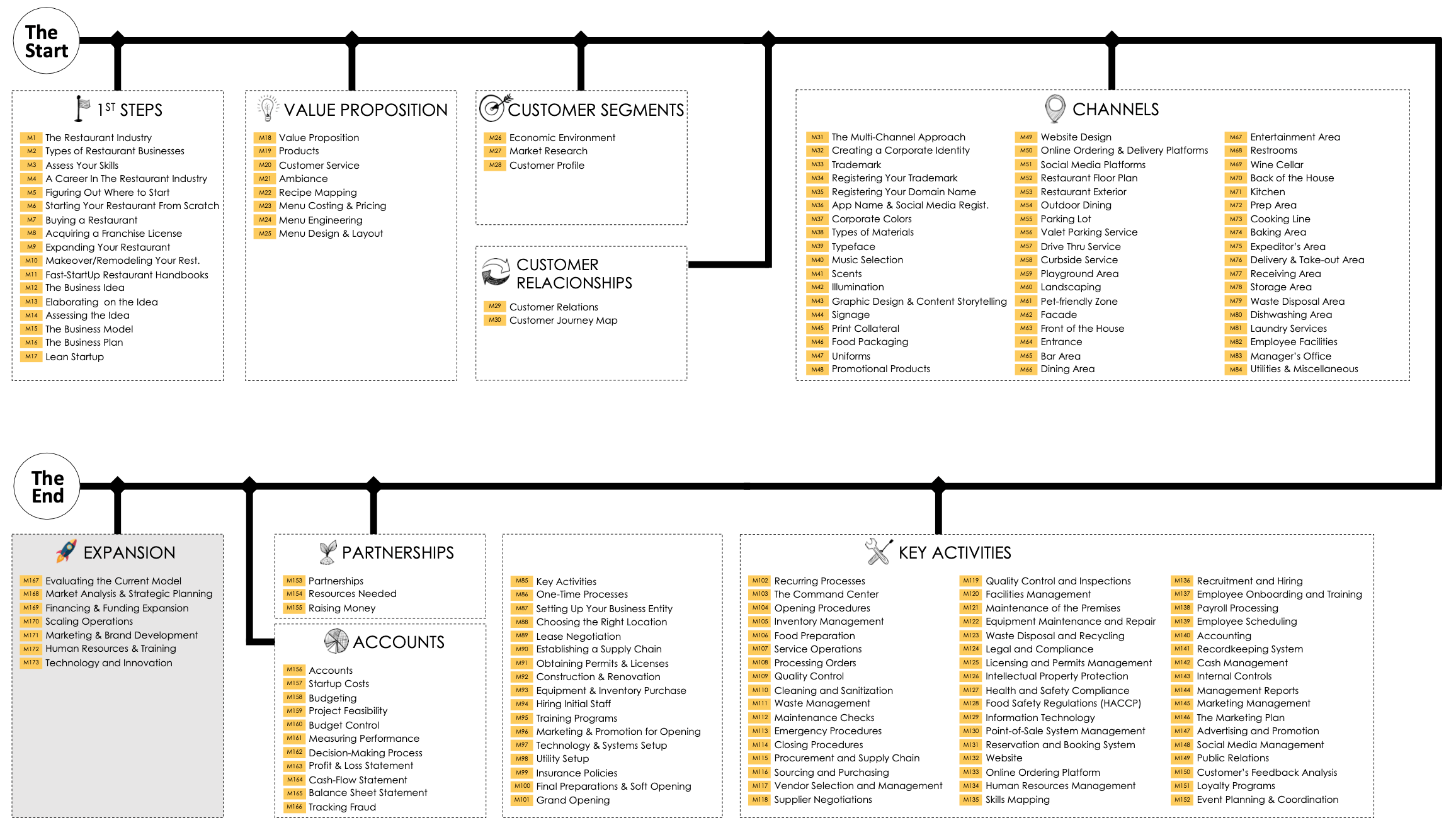
ROADMAP
Created with